jueves, 30 de agosto de 2012

Essay task: To kill a mockingbird

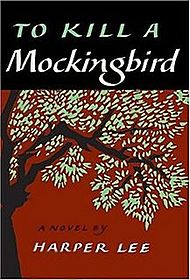
As I has been posting before, we are reading at class the book by Harper Lee's "To kill a mockingbird". Our first task to develop with this book was an essay of the first part of this one. I chose, to inspire myself in building my thesis, a question that said:  

What impact does setting have on your understanding of the central ideas or themes presented in Harper Lee's "To Kill a Mockingbird"?" 

Under this stated question, I fromulated my thesis, that after a few attempts, stated the following: "the setting presented in the story help us to understand the ideas of  H.Lee, by developing a contrast between this ones and the thoughts and ideas of 1920's society" I also added that this ideas of the author were expressed in the story by some characters, such as Scout, Atticus, or Jem. I think this was a really constructive activity that helped us to develop our critical thinking as active readers. I really enjoyed, although it implied a lot of writing.
TKM Part 1 Analysis


1. What is the reason for the author's choice of a young narrator?
2. How does Jem and Scout's views of Boo Radley change during part 1 of the book?
3. Atticus tells the children several times that they need to walk in someone else's shoes before judging the person. Describe times when Atticus, Scout or Jem walk in someone else's shoes. How does this change how they view the situations? What role does this advice play in sympathy and compassion?
4. How do you think Atticus managed his role as a single parent?
5. Discuss race issues in part 1 of the book.
6. From your reading of part 1, What does To Kill a Mockingbird teach us about how people cope with issues of race and class? Do you classify people in your world as different "folks?" Do you see those sort of distinctions today?
7. Who is your favorite character from part 1 and why?


Answers:

1- The whole idea of a young narrator is basically because she tells and describes everything she see through her eyes; I mean, with innocence. This, under my point of view, is used by the author to show us the bad things as incomprehensive acts, just as Scout, that, because she didn't knew the "real world", she wasn't able to understand this mean acts.

2- First they think that he is a very creepy man, almost a monster or a ghost, and that is why they attempted so much to get him out of the house. Then, they noticed that he was aperson, just like them, that was just apart from society. An event that changed their minds was the "folded pants".

3- A clear case for me is when Jem invites Walter Cunningham for lunch, because he didn't had money for one, and his education was not to borrow something he didn't have. He accepted the offer and ate a lot at Finch's house. Jem didn't make any trouble about this, because he felt compassion for Walter, and knew that he didn't had money for lunch, neither today or tomorrow.

4-He really did it well. he taught their children very well, not to discriminate, and to understand and respect others, just as he did.

5-This part of the book shows us a lot of racism situations, specially at the end. The other children from school bothered Jem and Scout becaus Atticus was deffending  a "negroe" who suposelly commited a rape. We already know about racism in the US by this time, as I showed you in one of my previous entries.

6-What we can learn from the ideas expressed by H.Lee through this part 1 of the nobel is that eventhough a big amount of people is racist, this is a bad acting way, it is not the correct thing to do. I think that we are all humans and we deserve the same rights, no matter who we are, or our skin color. Unfortunatelly, racism is still exixting in the world, but less than in that times.

7-I think it is Scout, because he is not afraid of telling what he feels, although she knows that a lot of people is going to think bad things about her. Her childish innocense leave us a very important lesson on good and bad things.

miércoles, 29 de agosto de 2012

To kill a Mockingbird: First chapter!

1. What do you learn in this chapter about Maycomb, Atticus Finch and his family?
2. Describe Calpurnia as Scout depicts her in Chapter 1.
3. What does Dill dare Jem to do?
4. The townspeople of Maycomb have some fears and superstitions about the Radley place. Describe these fears and superstitions.
5. How important is bravery to Jem?
6. What do you notice about the narrative voice and viewpoint of the story?

Answers:

1- It is a small southern town, very poor because of the great depression maybe, and also very old. Atticus Finch was the father of Jean Louise Finch (Scout) and Jeremy Atticus Finch (Jem). Their mother died few years ago, so they are basicaly Atticus family. There is also Calpurnia, their housekeeper.

2- Scout desbribes her as an african american woman, skinny but huge hands, and sometimes very though tough with Scout.

3- To knock on Radley place's door, in order to take Boo Radley out of the house.

4- People in town believed that the Radley Place was cursed, that Arthur "Boo" Radley was somwthing similar of a ghost because nobody ever saw him; the door of that house was always closed since they catched Arthur involbed in something like a gang.

5- It's one of the most important things for him because of mainly one reasons: he was the older brother of Scout, so he felt that he needed to show her that he was able to protect her.

6- Everything is told by Scout, who, as a child, shows a very innocent perpective of everything she is able to see, even bad things.
Harper Lee: life and times

We are by this time in class reading the book "to kill a mockingbird" by Harper Lee. As I have mentioned before in my entries, there are two main contexts, and today I am going to show you a few information about Harper Lee's history and experiences.


Nelle Harper Lee was born on April 28, 1926, in Monroeville, Alabama, a sleepy small town similar in many ways to Maycomb, the setting of To Kill a Mockingbird. Like Atticus Finch, the father of Scout, the narrator and protagonist of To Kill a Mockingbird, Lee’s father was a lawyer. Among Lee’s childhood friends was the future novelist and essayist Truman Capote, from whom she drew inspiration for the character Dill. These personal details notwithstanding, Lee maintains that To Kill a Mockingbird was intended to portray not her own childhood home but rather a nonspecific Southern town. “People are people anywhere you put them,” she declared in a 1961 interview.


Yet the book’s setting and characters are not the only aspects of the story shaped by events that occurred during Lee’s childhood. In 1931, when Lee was five, nine young black men were accused of raping two white women near Scottsboro, Alabama. After a series of lengthy, highly publicized, and often bitter trials, five of the nine men were sentenced to long prison terms. Many prominent lawyers and other American citizens saw the sentences as spurious and motivated only by racial prejudice. It was also suspected that the women who had accused the men were lying, and in appeal after appeal, their claims became more dubious. There can be little doubt that the Scottsboro Case, as the trials of the nine men came to be called, served as a seed for the trial that stands at the heart of Lee’s novel.

Lee began To Kill a Mockingbird in the mid-1950s, after moving to New York to become a writer. She completed the novel in 1957 and published it, with revisions, in 1960, just before the peak of the American civil rights movement.

Critical response to To Kill a Mockingbird was mixed: a number of critics found the narrative voice of a nine-year-old girl unconvincing and called the novel overly moralistic. Nevertheless, in the racially charged atmosphere of the early 1960s, the book became an enormous popular success, winning the Pulitzer Prize in 1961 and selling over fifteen million copies. Two years after the book’s publication, an Academy Award–winning film version of the novel, starring Gregory Peck as Atticus Finch, was produced. Meanwhile, the author herself had retreated from the public eye: she avoided interviews, declined to write the screenplay for the film version, and published only a few short pieces after 1961. To Kill a Mockingbird remains her sole published novel. Lee eventually returned to Monroeville and continues to live there.


As we can see here, a lot of things presented in her nobel are based on what he lived. Other things that involved her childhood were the economic crisis, called the great depression, that affected almost all the United States, having as a resault a lot of poorness and bad life conditions for the ones with no money. She also lived the segregation of african american people. As an example of this: Jim Crow laws; the thaught "separate but equal", between other things involved in racism in US. This are the experiences that helped
 H. Lee in the development of the story she called "to kill a mockingbird".
More interesting facts:


Some information about context!

First, I am going to give you a short definition of context, taken from www.dictionary.com, that says:


  • The parts of a written or spoken statement that precede orfollow a specific word or passage, usually influencing itsmeaning or effect: You have misinterpreted my remarkbecause you took it out of context.
  • The set of circumstances or facts that surround a particularevent, situation, etc.
We can distinguish to different types of context: context of reception and context of production. The second one alludes to de sircumstances, historycal facts that surrounded the author by the time the book was written. The first one alludes to the background that the reader is living, bay the time he reads the book.

To explain this in a more graphic way, I think it would be proper to mention some examples. The most common contexts of produccion are war, poorness, racism. Although, it can be anythink that the author experienced through his life that has useful for him as an inspiration for writing the book.


martes, 28 de agosto de 2012

Some questions about "the leopard" and "Notable american women"

This questions were stated by me, after the reading of extracts from both texts, presented in page 272 and 273 from our Course Companion book. 

First, the questions for "The leopard":


Why does the author gives such a detailed description of the setting ?
Why he uses mythology characters and features ?
 Why in his description he makes this paintings seem like they are alive?

Questions for "Notable american women":

What does "father of distinction" means in THIS text ?
Why does the author mention himself in the text ?
About the question before, why the narrator mentions the capacity of the author to change everything in the text ?


Gender ads activity!

Throughout this classes, we have been learning about de diferences between genders in general, specially the way they use language. This is the reason why we did this activity. We were said to do two ads, one for woean, and the other for men. My partner, Joaquin rodriguez, and I, did this advertisings about a new axe deodorant made for men, and a new HP notebook, designed and made for women. I reallu enjoyed this activity, because we learned through practice and aplication how is the language used dependin on if the one who is speaking is male or female.