miércoles, 29 de agosto de 2012

Harper Lee: life and times

We are by this time in class reading the book "to kill a mockingbird" by Harper Lee. As I have mentioned before in my entries, there are two main contexts, and today I am going to show you a few information about Harper Lee's history and experiences.


Nelle Harper Lee was born on April 28, 1926, in Monroeville, Alabama, a sleepy small town similar in many ways to Maycomb, the setting of To Kill a Mockingbird. Like Atticus Finch, the father of Scout, the narrator and protagonist of To Kill a Mockingbird, Lee’s father was a lawyer. Among Lee’s childhood friends was the future novelist and essayist Truman Capote, from whom she drew inspiration for the character Dill. These personal details notwithstanding, Lee maintains that To Kill a Mockingbird was intended to portray not her own childhood home but rather a nonspecific Southern town. “People are people anywhere you put them,” she declared in a 1961 interview.


Yet the book’s setting and characters are not the only aspects of the story shaped by events that occurred during Lee’s childhood. In 1931, when Lee was five, nine young black men were accused of raping two white women near Scottsboro, Alabama. After a series of lengthy, highly publicized, and often bitter trials, five of the nine men were sentenced to long prison terms. Many prominent lawyers and other American citizens saw the sentences as spurious and motivated only by racial prejudice. It was also suspected that the women who had accused the men were lying, and in appeal after appeal, their claims became more dubious. There can be little doubt that the Scottsboro Case, as the trials of the nine men came to be called, served as a seed for the trial that stands at the heart of Lee’s novel.

Lee began To Kill a Mockingbird in the mid-1950s, after moving to New York to become a writer. She completed the novel in 1957 and published it, with revisions, in 1960, just before the peak of the American civil rights movement.

Critical response to To Kill a Mockingbird was mixed: a number of critics found the narrative voice of a nine-year-old girl unconvincing and called the novel overly moralistic. Nevertheless, in the racially charged atmosphere of the early 1960s, the book became an enormous popular success, winning the Pulitzer Prize in 1961 and selling over fifteen million copies. Two years after the book’s publication, an Academy Award–winning film version of the novel, starring Gregory Peck as Atticus Finch, was produced. Meanwhile, the author herself had retreated from the public eye: she avoided interviews, declined to write the screenplay for the film version, and published only a few short pieces after 1961. To Kill a Mockingbird remains her sole published novel. Lee eventually returned to Monroeville and continues to live there.

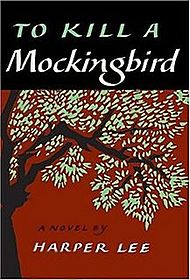
As we can see here, a lot of things presented in her nobel are based on what he lived. Other things that involved her childhood were the economic crisis, called the great depression, that affected almost all the United States, having as a resault a lot of poorness and bad life conditions for the ones with no money. She also lived the segregation of african american people. As an example of this: Jim Crow laws; the thaught "separate but equal", between other things involved in racism in US. This are the experiences that helped
 H. Lee in the development of the story she called "to kill a mockingbird".
More interesting facts:


Some information about context!

First, I am going to give you a short definition of context, taken from www.dictionary.com, that says:


  • The parts of a written or spoken statement that precede orfollow a specific word or passage, usually influencing itsmeaning or effect: You have misinterpreted my remarkbecause you took it out of context.
  • The set of circumstances or facts that surround a particularevent, situation, etc.
We can distinguish to different types of context: context of reception and context of production. The second one alludes to de sircumstances, historycal facts that surrounded the author by the time the book was written. The first one alludes to the background that the reader is living, bay the time he reads the book.

To explain this in a more graphic way, I think it would be proper to mention some examples. The most common contexts of produccion are war, poorness, racism. Although, it can be anythink that the author experienced through his life that has useful for him as an inspiration for writing the book.


martes, 28 de agosto de 2012

Some questions about "the leopard" and "Notable american women"

This questions were stated by me, after the reading of extracts from both texts, presented in page 272 and 273 from our Course Companion book. 

First, the questions for "The leopard":


Why does the author gives such a detailed description of the setting ?
Why he uses mythology characters and features ?
 Why in his description he makes this paintings seem like they are alive?

Questions for "Notable american women":

What does "father of distinction" means in THIS text ?
Why does the author mention himself in the text ?
About the question before, why the narrator mentions the capacity of the author to change everything in the text ?


Gender ads activity!

Throughout this classes, we have been learning about de diferences between genders in general, specially the way they use language. This is the reason why we did this activity. We were said to do two ads, one for woean, and the other for men. My partner, Joaquin rodriguez, and I, did this advertisings about a new axe deodorant made for men, and a new HP notebook, designed and made for women. I reallu enjoyed this activity, because we learned through practice and aplication how is the language used dependin on if the one who is speaking is male or female.


domingo, 24 de junio de 2012

New Zealand trip


This winter hollydays, I had the great oportunity to travel to New Zealand with 9 friends from school. I must say that it was one of the best experiences that I've had in my life, maybe because of the great contry that it is, or maybe because I leaved for 3 weeks in Togher family's house.


One of the things that you notice at the moment you arrive to NZ is that the life and adverticings are based in two things: rugby and kiwis. Rugby for the NZ society is one of the most important things. The local team is called Hurricanes, and although is not the best team, they are going through a good time right now.


Other thing that I really liked from the country is the people. Everybody is very nice, and there are almost no thieves. And one of the most special experiences was staying in the house of a student from the scots college, Jake Togher. First days were very serious for me, because they have diferent costums, and i didn't know the family, but after a few days I really enjoyed spending time with my host brother and family, although my friends and i used to met a lot in the citiy. I think this will be an experience I will never forget.
Analysing " A language with no limits"


The text "A lanuage with no limts" talks about, as the tittle says, language, but more specific, variations in English, as the henglisn, the chinglish or arabizi. This very special dialects created by people who are not native English speakers, comes from the combination of English itslef, and other language, depending on wich of them we are talking about. The article, taken from the toronto star newspaper, inform to people intersted in new dialects about how this new forms of speaking and writing have been developed, specially in toronto, Canada, and how this is good for language and other cultures, because it ctreates a form of comunication for this three cultures in this case, that allow them to comunicate, but maintaining their own language.


Apu, character from "The Simpsons"
We can find some argot in this text, wich are some phrases that the author uses as an example of the new dialects. Some of them are publicity, from big brands as Pepsi and Coke. We are able to infer that the author is supporting the new dialects, because he shows us in the whole text why is this good for english, and compares it with the irish or even the american english. In my opinion, the development of new forms of language is good, specially for non-native English speakers, because it allow them to comunicate better, in a world in wich English is the most important language up to now.
What is a social media?


The merrian-webster dictionary defines social media as  forms of electronic communication (as Web sites for social networking and microblogging) through which users create online communities to share information, ideas, personal messages, and other content (as videos). Twitter. Facebook. Pinterest. These are all examples of social media, and I bet as soon as you hear these words, you can add at least another three sites to the list off the top of your head.

Social media is a type of online media that expedites conversation as opposed to traditional media, which delivers content but doesn't allow readers/viewers/listeners to participate in the creation or development of the content. There is a wide variety of social media, ranging from social sharing sites such as YouTube and Flickr through social networks such as LinkedIn and Facebook.


Social media has shot to the forefront of people's attention because it's fun. Thanks to social media, it's easy to share your ideas, photos, videos, likes and dislikes, with the world at large - and find out what they think of them. You can find friends, business contacts and become part of a community or a bunch of different communities. Social media gives you what TV never could - a chance to be engaged and engage others.
The next video shows some facts about social media, and how it has been developed. Also shows how it is good for companies and for people.